
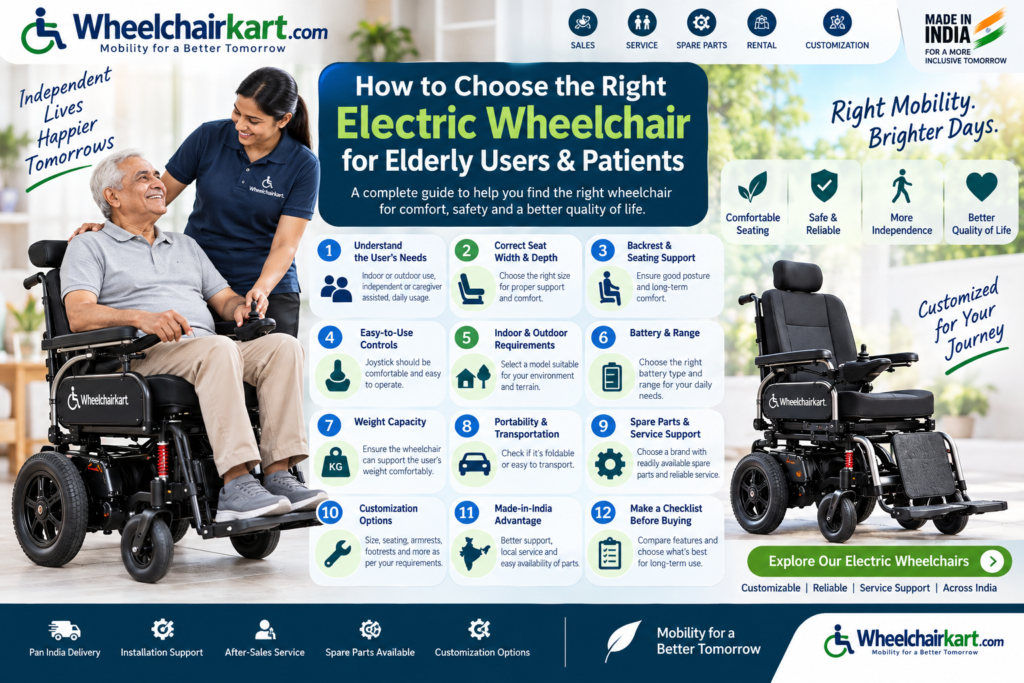
How to Choose the Right Electric Wheelchair for Elderly Users & Patients
Choosing the right electric wheelchair is an important decision, especially when the wheelchair will be used regularly for daily mobility. The right wheelchair should not only provide powered movement but also offer comfortable seating, appropriate dimensions, reliable performance, easy controls and suitable support for the user’s actual requirements.
For elderly users and patients, there is no single electric wheelchair that is perfect for everyone. Body size, mobility level, seating posture, home environment, outdoor requirements and duration of use can all influence the right choice.
1. Understand the User’s Actual Requirements
Before selecting an electric wheelchair, first understand how and where it will be used.
Consider:
Is it primarily for indoor or outdoor use?
How many hours per day will the user spend in the wheelchair?
Will the user operate the joystick independently?
Will a caregiver also need to assist?
What type of surfaces will the wheelchair encounter?
Does the user need a compact or foldable wheelchair?
Is the wheelchair required for travel?
Does the user require additional positioning or seating support?
A wheelchair selected according to actual usage is generally more practical than one chosen only by appearance or price.
2. Get the Correct Seat Width
Seat width is one of the most important measurements when choosing an electric wheelchair.
A seat that is too narrow can be uncomfortable, while an excessively wide seat may not provide appropriate positioning.
The correct seat width should be selected according to the user’s body measurements and seating requirements.
For customized electric wheelchairs, the seat width can be considered as part of the overall wheelchair configuration.
3. Check Seat Depth
Seat depth is equally important for comfortable long-term sitting.
The seat should provide appropriate support without putting unnecessary pressure behind the knees. The correct depth depends on the user’s body dimensions and seating posture.
For users who spend several hours in their wheelchair every day, proper seating dimensions should be a priority.
4. Consider Backrest & Seating Support
A comfortable backrest can make a significant difference for users who require extended wheelchair use.
Depending on the user’s requirements, you may consider:
Backrest height
Backrest angle
Seat cushion
Lateral or postural support
Reclining options
Tilt-in-space options
Users with more complex positioning requirements may benefit from a wheelchair specifically configured for their seating needs.
5. Choose the Right Control System
The joystick should be easy for the user to operate.
Before purchasing, consider whether the user can comfortably:
Reach the joystick
Move the joystick accurately
Control forward and reverse movement
Adjust speed when required
Operate the wheelchair in confined spaces
If the user has limited hand movement or strength, discuss the available control options with the wheelchair supplier or rehabilitation professional.
6. Consider Indoor & Outdoor Requirements
The intended environment is an important part of wheelchair selection.
For Indoor Use
A compact electric wheelchair may be preferable where the user needs to navigate:
Bedrooms
Hallways
Doorways
Lifts
Kitchens
Other confined spaces
For Outdoor Use
Outdoor users may need to consider:
Wheel size
Ground clearance
Suspension, where applicable
Turning ability
Battery requirements
Frame construction
Surface conditions
The wheelchair should be selected according to the environments in which it will actually be used.
7. Battery & Range
Battery specifications are important for powered mobility, particularly when the wheelchair is regularly used outdoors.
Before purchasing, understand:
Battery type
Battery capacity
Charging requirements
Expected operating range
Battery replacement availability
Charging time according to the manufacturer’s specification
Do not select a wheelchair based only on the advertised range. Actual range can vary depending on factors such as user weight, terrain, speed, battery condition and usage.
8. Weight Capacity
Always check the manufacturer’s specified maximum user weight capacity.
The wheelchair should have an appropriate capacity for the intended user, while also considering clothing, personal items and accessories where applicable.
Choosing the correct capacity is particularly important for long-term daily use.
9. Wheelchair Weight & Transportation
If the wheelchair needs to be transported frequently, consider its overall weight and whether it can be folded or dismantled.
Important questions include:
Can it fit into the available vehicle?
Is it easy for caregivers to handle?
Can the battery be removed?
Is the frame foldable?
Are components detachable?
A heavier wheelchair may offer different structural or functional advantages, but portability should be considered if regular transportation is required.
10. Spare Parts & After-Sales Service
One of the most overlooked factors when purchasing an electric wheelchair is long-term service support.
An electric wheelchair is a mechanical and electrical mobility device. Over time, certain components may require inspection, replacement or servicing.
Before purchasing, ask about the availability of:
Batteries
Chargers
Motors
Controllers
Joysticks
Wheels and tyres
Castors
Armrests
Footrests
Cushions
Other replacement components
A supplier with reliable spare parts and service support can make long-term ownership considerably easier.
11. Customization Can Make a Big Difference
Every user has different requirements. This is why a customized electric wheelchair can be a valuable option.
Depending on the model, customization may include:
Seat Width → Seat Depth → Seat Height → Backrest → Cushion → Armrests → Footrests → Controls
Instead of selecting a wheelchair simply because it is available in a standard size, discuss the user’s actual measurements and requirements with the manufacturer or supplier.
Why Customized Seating Matters
For a user who spends many hours in a wheelchair, the objective should be to create a seating configuration that provides appropriate:
Comfort
Support
Positioning
Accessibility
Everyday usability
12. Made-in-India Electric Wheelchairs
For long-term users, local manufacturing and support can offer practical advantages.
A Made-in-India electric wheelchair may provide better opportunities for customization, technical assistance, servicing and access to replacement parts.
When comparing imported and locally manufactured products, don’t look only at the initial purchase price. Also consider the long-term ownership experience.
13. Make a Checklist Before Buying
Before purchasing an electric wheelchair, use this simple checklist:
☑ Correct seat width
☑ Correct seat depth
☑ Comfortable seating
☑ Appropriate weight capacity
☑ Suitable indoor/outdoor configuration
☑ Easy-to-use joystick
☑ Appropriate battery specification
☑ Suitable range for actual usage
☑ Convenient transportation
☑ Spare parts availability
☑ After-sales service
☑ Warranty support
☑ Customization options
Conclusion
Choosing the best electric wheelchair for elderly users and patients is not simply about finding the most powerful or expensive model. The right choice depends on the individual’s size, seating requirements, mobility needs, environment, comfort, daily usage and long-term support.
For users who depend on their wheelchair every day, customized seating and reliable after-sales support can be especially important.
At WheelchairKart, the focus should be on helping users find a wheelchair based on their actual requirements rather than simply selecting a standard model. A properly sized, comfortable and serviceable electric wheelchair can become a dependable mobility solution for everyday life.
